
Late Fall Slow-Release Granular Fertilizer (Winterizer)
Timing, purpose, and expectations for this application.
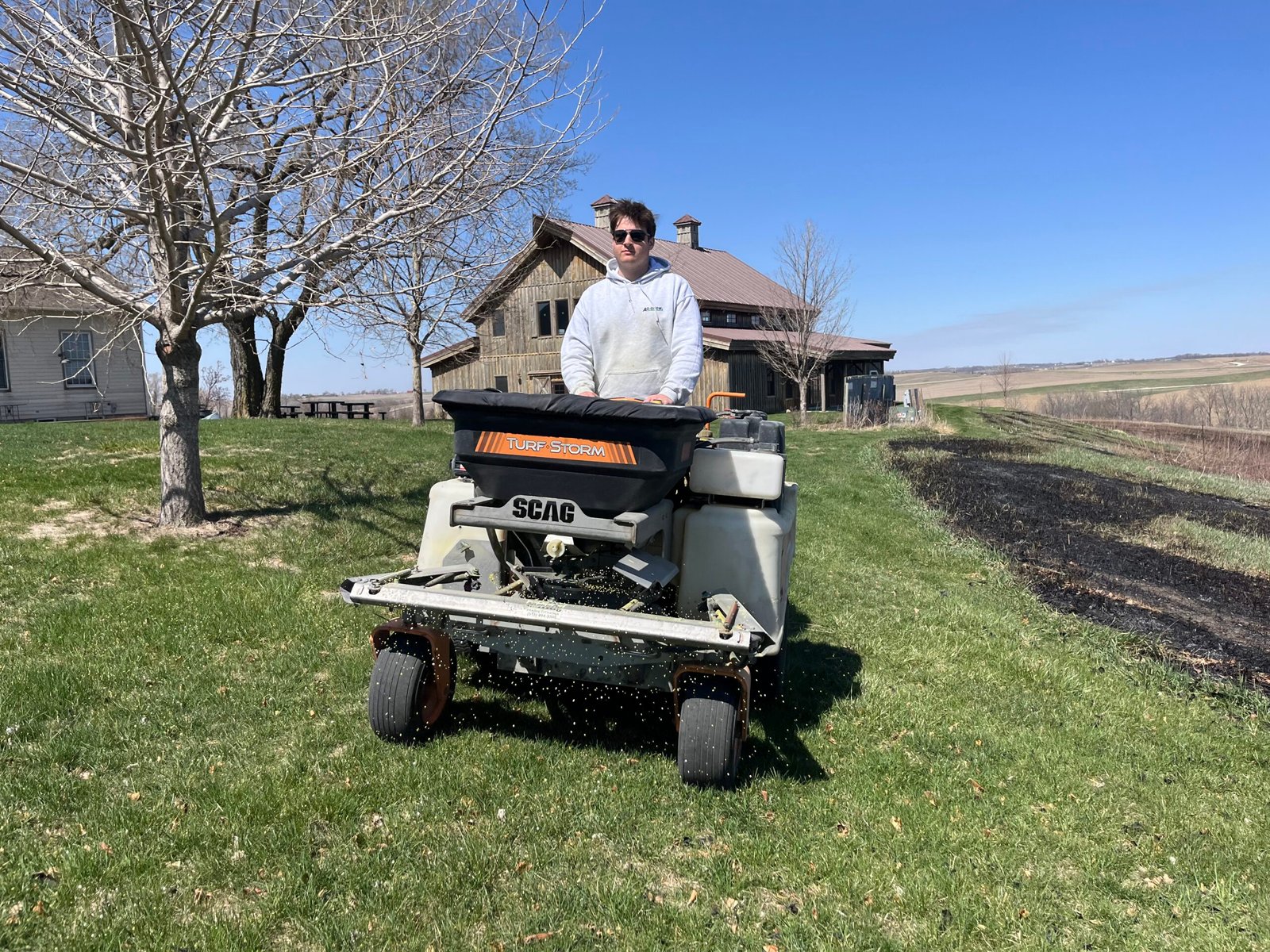
How This Application Works
This is the single most important fertilizer application of the entire year, and most homeowners don't understand why because the results aren't visible immediately. Applied in late October or early November, after top growth has slowed but before the ground freezes, the winterizer takes advantage of a unique period in the grass plant's growth cycle.
As temperatures drop and daylight shortens, cool-season grasses (which is what we have in Iowa - Kentucky bluegrass, fescue, ryegrass) stop producing leaf growth above ground. But below ground, root growth continues and actually accelerates.
The plant is shifting all its energy into building a massive, deep root system that will support next year's growth. The winterizer fertilizer feeds this root development, providing nitrogen and potassium that get stored in the roots and crown of the plant over winter.
When spring arrives, a lawn that received proper winterizer greens up 2-3 weeks earlier, grows in thicker and denser, handles heat stress better in summer, fights off weeds more effectively, and generally looks healthier all season long compared to a lawn that didn't get winterized. It's not just fall fertilizer - it's an investment in next year's entire lawn quality.
Miss this application, and your lawn starts spring already behind, thinner, slower to green up, and more susceptible to stress all year.
Benefits
- Builds stronger roots before winter.
- Delivers earlier spring green-up.
- Improves next season density and resilience.
What to Expect
Before
Top growth is slowing while roots are still active.
After
Roots store nutrients for a faster, thicker spring start.
Ready for a Custom Quote?
Tell us about your property and we will recommend the right program.